What is Sauna Therapy?
Sauna therapy is the practice of exposing the body to elevated temperatures in a controlled environment to induce deep sweating and activate a range of physiological stress responses. The practice has roots spanning thousands of years, from the Finnish sauna tradition (where the word itself originates) to Russian banyas, Native American sweat lodges, and Japanese onsen culture.
There are three primary types of sauna therapy. Traditional Finnish saunas use a wood- or electric-heated stove to warm the air to 80–100°C with low humidity, and water is periodically thrown on hot rocks to create bursts of steam. Infrared saunas use infrared light panels to heat the body directly at lower ambient temperatures (45–65°C), penetrating deeper into tissue. Steam rooms operate at lower temperatures (40–50°C) but with near-100% humidity, creating a different thermal challenge.
The Science Behind Sauna Use
Dr. Rhonda Patrick, a biomedical researcher specializing in aging and nutrition, has extensively reviewed the scientific literature on sauna use and its relationship to longevity. Her analysis of Finnish longitudinal studies has brought mainstream attention to the remarkable health benefits of regular heat exposure.
A landmark 20-year prospective study published in JAMA Internal Medicine, following over 2,300 Finnish men, found that those who used a sauna 4–7 times per week had a 40% reduction in all-cause mortality and a 50% reduction in cardiovascular death compared to those who used a sauna once per week. The dose-response relationship was clear: more frequent sauna use correlated with greater reductions in risk.
Heat exposure triggers the production of heat shock proteins (HSPs), which serve as molecular chaperones that repair misfolded proteins and protect cells from stress. A single sauna session can increase growth hormone levels by 200–300%, and repeated sessions can elevate growth hormone by as much as 1,600% when combined with specific protocols such as two 20-minute sessions separated by a 30-minute cooling period.
Regular sauna use has also been shown to improve endothelial function, lower blood pressure, reduce C-reactive protein levels, and increase the expression of FOXO3 — a longevity gene associated with extended healthspan in centenarian studies.
Benefits of Regular Sauna Use
Cardiovascular Health
Sauna use mimics moderate cardiovascular exercise, increasing heart rate to 100–150 bpm, improving vascular compliance, and reducing blood pressure over time. The Finnish study showed a 50% reduction in fatal cardiovascular events with frequent use.
Detoxification
Deep sweating mobilizes and excretes heavy metals (arsenic, cadmium, lead, mercury), BPA, and phthalates. Studies have shown that certain toxins are preferentially excreted through sweat versus urine.
Muscle Recovery
Heat increases blood flow to muscles, accelerates the clearance of metabolic waste products, and promotes the repair of exercise-induced muscle damage through heat shock protein activation.
Stress Reduction
Sauna use activates the parasympathetic nervous system post-session, reduces cortisol levels, and triggers endorphin release. The meditative quality of sitting in heat provides a potent mental reset.
Improved Sleep
The rise and subsequent fall in core body temperature after an evening sauna session mimics the natural thermoregulation pattern that initiates sleep, leading to deeper and more restorative rest.
Longevity
Through mechanisms including reduced inflammation, improved cardiovascular function, heat shock protein activation, and FOXO3 expression, regular sauna use is among the most well-supported lifestyle interventions for extending healthspan.
Sauna Protocols
The optimal sauna protocol balances temperature, duration, and frequency. Hydration is critical — drink at least 500ml of water before entering and replenish electrolytes after your session.
Temperature
80°C (176°F)
Duration
10–15 minutes
Start with a single session at moderate heat. Sit on a lower bench where the air is cooler. Exit if you feel dizzy or uncomfortable. 2–3 sessions per week.
Temperature
85–90°C (185–194°F)
Duration
15–20 minutes
Progress to upper benches for higher heat. Begin experimenting with Löyly (pouring water on rocks for steam bursts). 3–4 sessions per week.
Temperature
85–95°C (185–203°F)
Duration
Multiple rounds of 15–20 min
Combine 2–3 sauna rounds with cold exposure between rounds (contrast therapy). Each round separated by 5–10 minutes of cold shower or plunge. 4–7 sessions per week for maximum longevity benefit.
Our Stays with Saunas
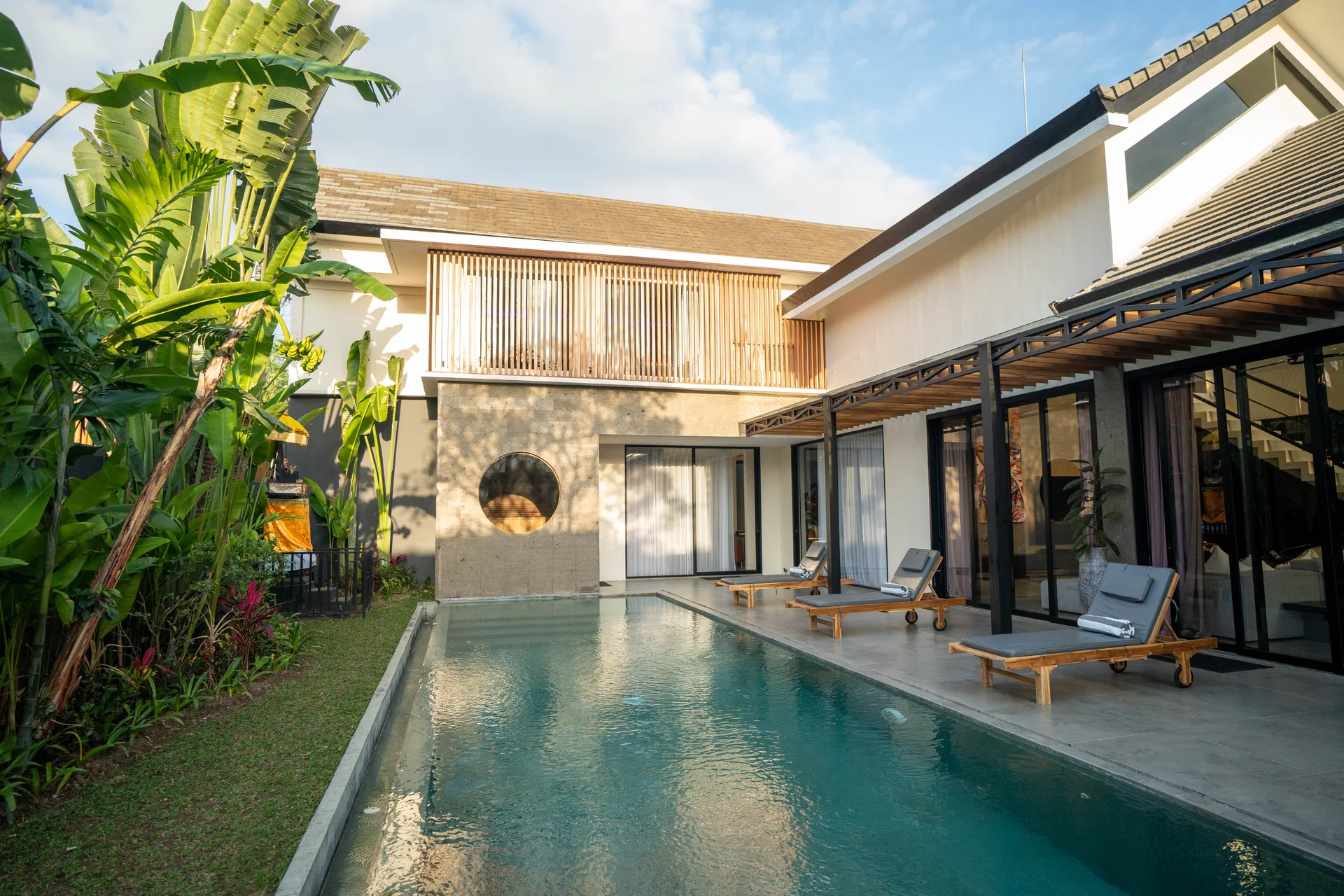
Nusa Nova's sauna stays range from traditional Finnish-style wood saunas nestled in tropical gardens to sleek infrared rooms with panoramic rice terrace views. Many include cold plunge pools for contrast therapy, allowing you to practice the full heat-cold protocol without leaving your villa.