
Contrast Therapy: The Complete Recovery Protocol
Sauna and cold plunge contrast therapy is the most evidence-backed active recovery tool available. Here is the exact protocol, the mechanism, and how to implement it across a training week.
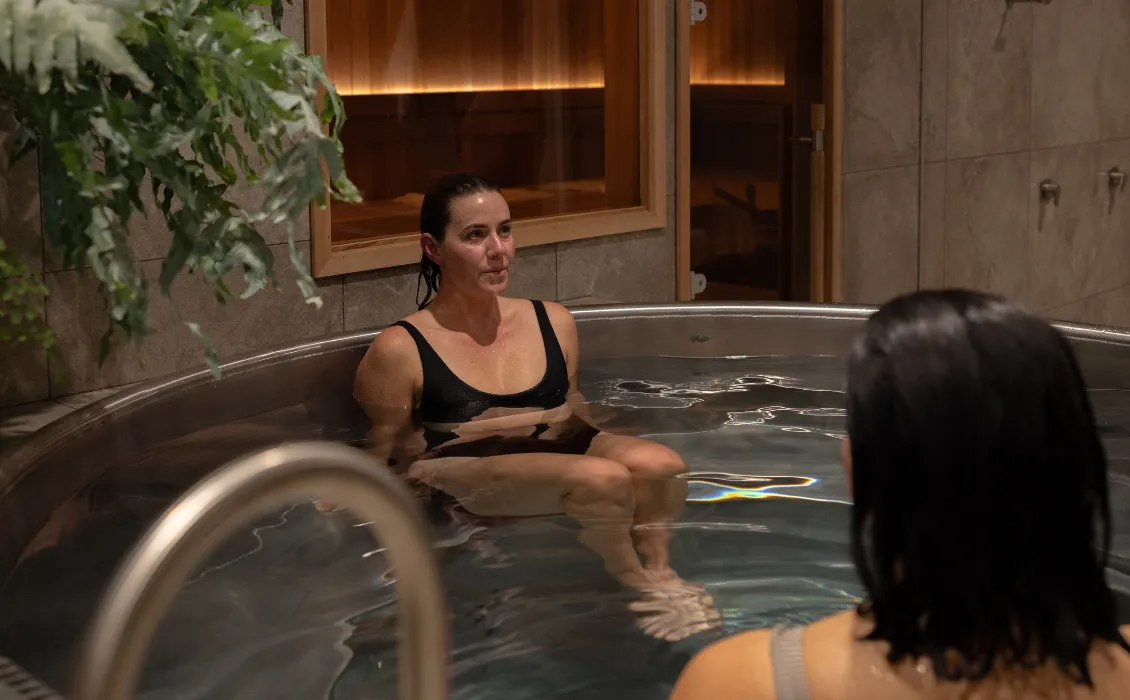
Contrast therapy — alternating between heat exposure and cold immersion — has been used by Scandinavian athletes for generations and is now the subject of serious sports science research. The mechanism is well understood, the evidence base is solid, and the practical implementation is straightforward. If you have access to a sauna and a cold plunge, this is the highest-return recovery tool in your stack.
The Mechanism: Vascular Pump
The physiological mechanism underlying contrast therapy is forced vasodilation and vasoconstriction — the 'vascular pump.' Heat causes peripheral blood vessels to dilate dramatically, driving blood volume toward the skin and away from working muscle tissue. Cold causes the opposite: rapid vasoconstriction, redirecting blood back toward the core and internal organs. Alternating between these states in rapid succession creates a pumping effect on the circulatory system that accelerates the clearance of metabolic byproducts (lactate, hydrogen ions, inflammatory cytokines) from previously stressed muscle tissue.
This is meaningfully different from either cold water immersion or heat exposure in isolation. The additive effect of contrast is supported by meta-analyses including Cochrane reviews on post-exercise recovery interventions, which consistently show contrast water therapy outperforming passive rest and performing comparably to CWI alone for short-term recovery, with superior subjective recovery ratings — meaning athletes feel better, which affects subsequent training quality.
Recovery Benefits
- Reduced DOMS (delayed onset muscle soreness) intensity and duration — typically 24–48 hours shorter resolution compared to passive rest
- Maintained power output in subsequent training sessions — key for multi-day competition or back-to-back training days
- Improved subjective recovery rating, which correlates with training quality and injury risk
- Accelerated clearance of blood lactate following high-intensity efforts
- Improved sleep onset latency — the post-sauna body temperature drop accelerates sleep pressure
- Sustained elevation in growth hormone output following heat exposure, supporting tissue repair
- Reduced perception of fatigue without the stimulant dependency of caffeine-based recovery strategies
When to Use Contrast Therapy Relative to Training
Timing matters and the evidence here creates a genuinely useful decision tree. For recovery use — reducing soreness, accelerating readiness for the next session — contrast therapy is most effective when performed 30–60 minutes after training completion. Immediate post-training cold exposure (within 15 minutes) can blunt acute anabolic signaling if hypertrophy is your primary goal; if performance recovery is the priority, that tradeoff is generally worth it.
The same-day versus next-day debate has been largely resolved by the research: same-day use (within 2–3 hours of the session) produces larger reductions in DOMS and better subsequent performance outcomes than next-morning use. For training camps and back-to-back high output days, this matters. If you're doing a single hard session followed by two rest days, the urgency is lower.
If your primary goal is muscle hypertrophy, limit cold exposure in the immediate post-training window (first 4 hours) — research from the University of Queensland and replicated in subsequent studies shows CWI can reduce the mTOR signaling cascade that drives muscle protein synthesis. Use contrast therapy on rest days or more than 4 hours after lifting. For performance recovery and sport — where output in subsequent sessions matters more than incremental size gains — this constraint largely does not apply.
The Protocols
The following protocols are calibrated for adults without contraindications (no cardiovascular conditions, not pregnant, no Raynaud's phenomenon). Begin at the basic level and build over multiple sessions. The sauna temperatures assume a Finnish-style dry sauna or infrared sauna; steam room temperatures run lower (40–50°C) with higher humidity and the perceived intensity is broadly comparable.
Basic Protocol
Temperature: Sauna 80–85°C → Cold Plunge 12–15°C
Duration: 3 rounds: 10 min sauna → 90 sec cold → 5 min rest
Total session time approximately 50 minutes. Start with a shower to remove sweat before entering the cold. The rest period between rounds should be passive — sitting or lying, not active movement. Hydrate with 500ml water before starting and sip between rounds. This is the entry point for most people and the protocol that most research is built on. Suitable for post-training use 2–3 days per week.
Advanced Protocol
Temperature: Sauna 90–95°C → Cold Plunge 8–10°C
Duration: 4–5 rounds: 12–15 min sauna → 2–3 min cold → 3 min rest
Total session time 75–90 minutes. At this duration and temperature differential, cardiovascular load is significant — heart rate in a 95°C sauna can reach 120–140 BPM in the final minutes. This is the protocol used by Nordic elite athletes and by Rhonda Patrick's research subjects in studies on heat shock protein elevation. Not appropriate immediately after extremely high-volume training sessions when total systemic stress is already maximal. Electrolyte replacement is essential post-session.
Sports-Specific: Competition Recovery
Temperature: Sauna 80°C → Cold Plunge 10°C
Duration: 4 rounds: 8 min sauna → 2 min cold → 3 min active rest (walking)
Designed for same-day use following competition or high-intensity output. Shorter sauna duration prevents additional physiological stress while still driving the vascular pump mechanism. Active rest (light walking between rounds) maintains circulation and prevents the blood pooling that can cause dizziness post-sauna. Begin within 60–90 minutes of event completion. Prioritize carbohydrate and protein intake before starting — glycogen depletion in a 80°C environment can be dangerous.
Building a Weekly Contrast Therapy Structure
For a 5-day training week with two rest days, the optimal structure typically places contrast therapy sessions immediately post-training on the two highest-intensity days and as a standalone recovery session on one rest day. Three contrast sessions per week is the most commonly used structure in elite sport research and in practical application for serious recreational athletes. More than four sessions per week starts to accumulate systemic heat stress as its own training variable — manageable but worth monitoring through HRV and resting heart rate trends.
Finding Villas with Both Sauna and Cold Plunge
The practical constraint for most travelers is access. Gyms with both sauna and cold plunge in the same facility are common in Scandinavian countries and increasingly available in premium fitness facilities globally, but rare in Bali's gym ecosystem. The highest-quality implementation in Bali is found in private villa stock — where a dedicated wellness area with a sauna room, cold plunge, and outdoor shower can be specified as a booking filter rather than a lucky discovery.
When evaluating villas, verify that the sauna reaches at least 80°C — many 'sauna' installations in Southeast Asia are steam rooms or far-infrared units operating at 50–60°C, which are useful but produce a different physiological response. Similarly, confirm the cold plunge operates below 15°C with active chilling rather than manual ice. The combination of reliable heat and reliable cold is what makes proper contrast therapy possible.
More from the Journal
Why Every Luxury Villa Should Have an Ice Bath
Cold plunge installations are moving from performance labs into premium villas across Bali. Here's the science, the economics, and what discerning guests now expect.
Feb 17, 2026 · 8 min read
Area GuideThe Complete Canggu Fitness Guide
Canggu has quietly become Southeast Asia's most serious fitness destination. This is where to train, eat, run, and recover across Berawa, Batu Bolong, and Echo Beach.
Feb 9, 2026 · 9 min read
IndustryThe Rise of Wellness Tourism in Bali
Bali's tourism identity is shifting from party destination to performance hub. Here's why wellness travel is growing at 20%+ annually and what it means for how villas are being built.
Jan 27, 2026 · 7 min read